






Automatic hotmelt section gluing machine
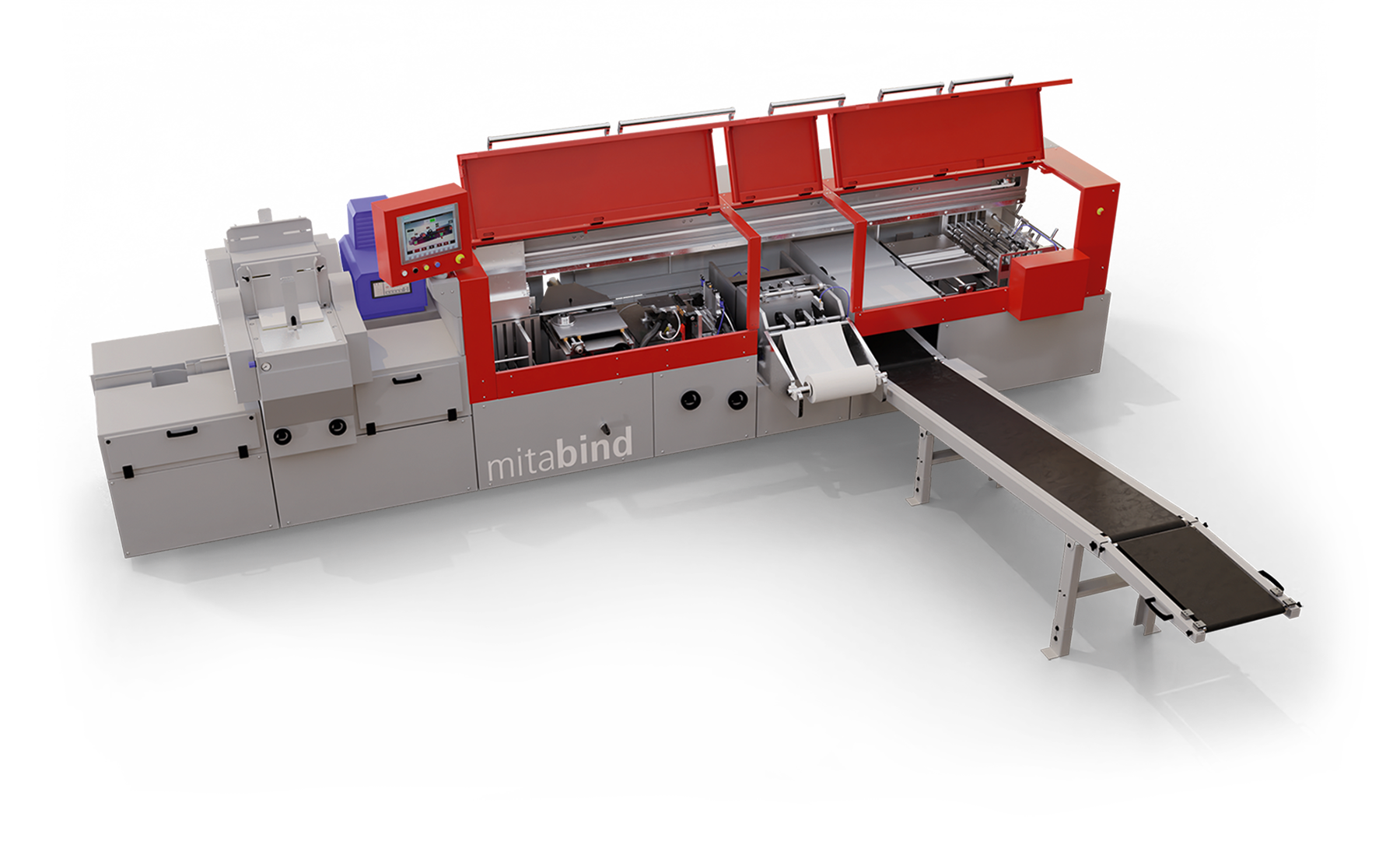
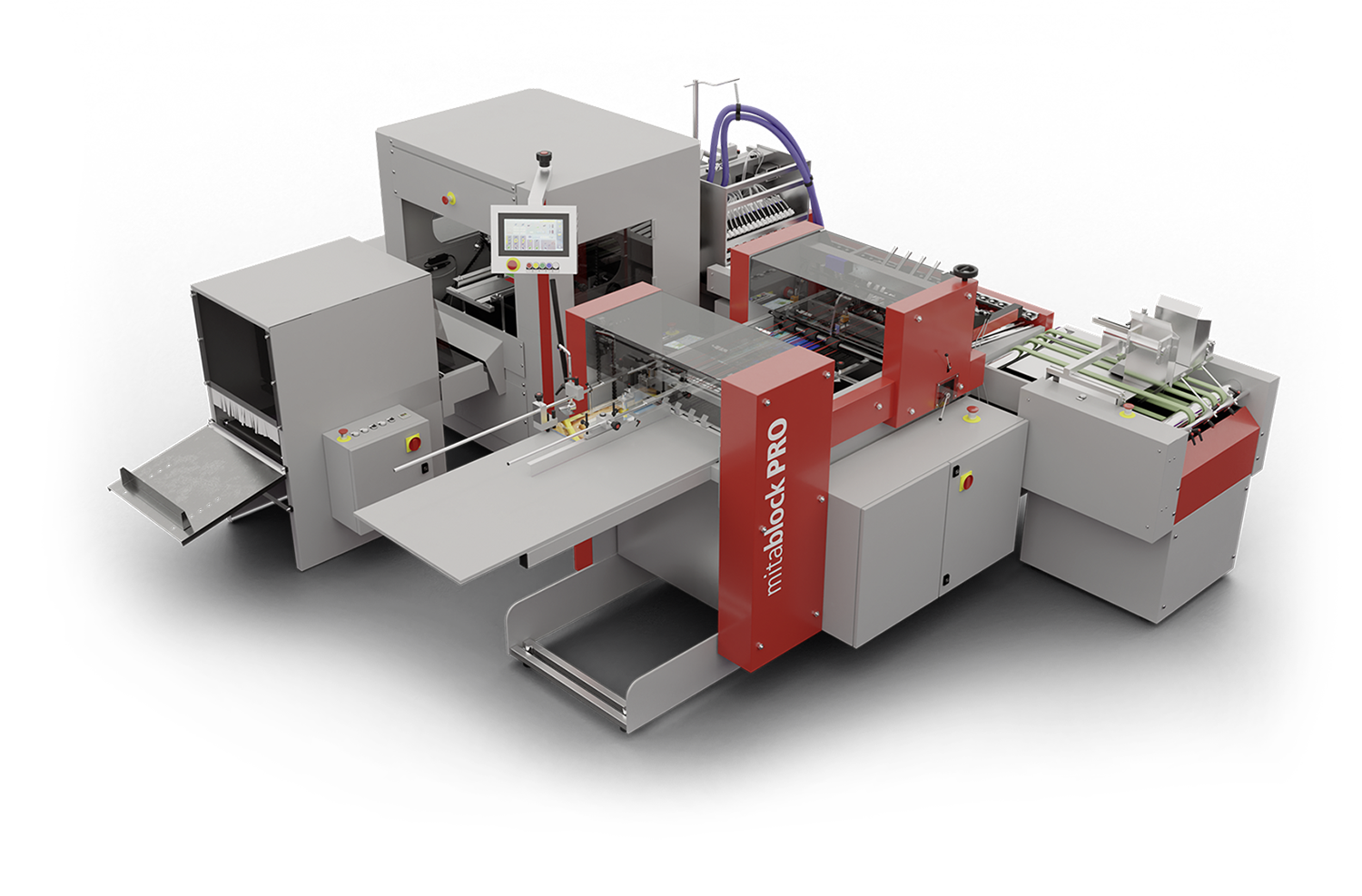
The mitablock 450 is a fully automatic layflat hotmelt section gluing machine designed especially for the production of high-quality layflat book blocks in single- to very short-runs. Thanks to the high degree of automation with simple format setup times, ease of operation and small footprint, it achieves a unique position in the layflat book-on-demand sector in the lower speed range (up to 900 gluings / h).

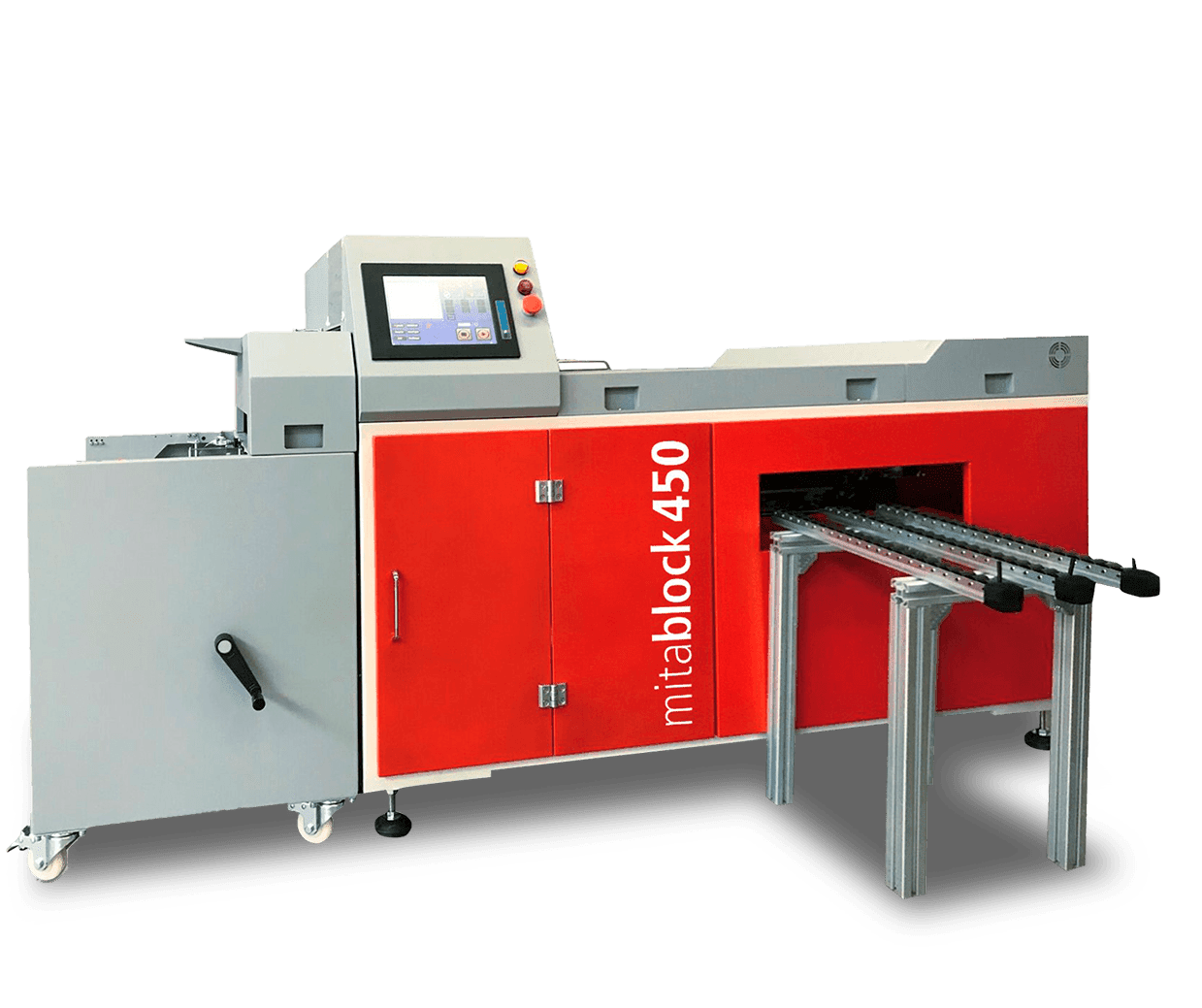
The mitablock 450 feeds, creases, folds and glues single-sided printed sheets in one passage. A roller applies a very thin layer of pressure-sensitive hotmelt, before the sheets are assembled in precise register into a finished layflat book block.
The integrated board feeder can place up to four boards between folded sections, including inserts in different colours. The result is a strong, stable block with an uninterrupted panoramic image across two adjacent pages.
Suitable applications include photobooks, premium catalogues and presentations of new products or projects, helping digital printers and book manufacturers enter markets with higher added value.
This technology was developed in China and is patent protected in the USA, EU and China. The mitablock 450 is manufactured to Digibook Technology specifications and standards.

A pile feeder and separate board feeder provide exact alignment and double-sheet detection. Different board-infeed sequences are possible.
No separate format makeready is needed. Manually adjustable feeder side guides and automatic sheet-length measurement transfer the format data to the machine.
Enter the number of sections and the board-insertion sequence. Print-mark or barcode control can identify completed blocks, allowing different section counts to run continuously without a changeover.
Process different paper and board thicknesses and qualities. Creasing tools can be converted to different geometries where required.
A stationary roller applies a very thin hotmelt layer of less than 20 g/m².
Blocks are assembled horizontally on a table, with sensor-controlled readjustment of each folded sheet for exact alignment.
One operator runs the machine. At its operating speed, the operator can also carry out other tasks alongside production.

| Parameter | Specification | Details |
|---|---|---|
| Production speed | Up to 900 sections / h | Depending on format. Sections per hour, not finished book blocks. |
| Open sheet format | 152 × 305 to 457 × 914 mm6 × 12 to 18 × 36 in | Height × width; standard unfolded sheet dimensions. |
| Intermediate cardboard format | 152 × 152 to 457 × 457 mm6 × 6 to 18 × 18 in | Height × width. |
| Paper thickness | 0.15–0.30 mm¹⁄₁₂₈–¹⁄₆₄ in | Material suitability subject to sampling. |
| Paper grammage | Depending on paper texture | Minimum and maximum established after sampling. |
| Cardboard thickness | 0.35–1.00 mm¹⁄₆₄–³⁄₆₄ in | Intermediate board inserts. |
| Electrical supply | 2 kW · 220 V · 50 Hz | Specified electrical requirements. |
| Air consumption | 100 Nl/min at 6 bar | Compressed air supply. |
| Glue consumption | Approx. 15–20 g/m² | Depending on paper and cardboard surfaces. |
| Floor space, closed | Approx. 3.10 × 1.70 m11 × 6 ft | Machine footprint. |
| Weight | Approx. 1,400 kg3,100 lb | Machine weight. |
| Section length | A | B | C |
|---|---|---|---|
| 304.8 mm (12 in) | 4.0 s | 3.4 s | 20.0 s |
| 406.4 mm (16 in) | 4.0 s | 3.5 s | 21.0 s |
| 609.6 mm (24 in) | 4.5 s | 3.8 s | 23.0 s |
| 914.4 mm (36 in) | 5.0 s | 4.0 s | 24.0 s |
Where inch and millimetre values differ, the millimetre value is binding. Technical specifications are subject to change without notice.
The mitablock 450 automatically feeds, creases, folds and glues printed sheets to produce layflat book blocks. Typical applications include photobooks, premium catalogues and presentation books where images extend across a two-page spread.
Yes. The mitablock 450 is designed for single-copy and very short-run layflat production. Operators can enter job settings on the touchscreen or recall saved recipes for repeat work.
The mitablock 450 is designed for single-copy and very short runs, while the mitablock PRO is designed for short to medium runs. The choice depends on your job mix, materials, formats and required output. Digibook can help compare the configurations against your production requirements.
The specified speed is up to 900 sections per hour, depending on format. This is not a finished-book rate: each book block contains several sections. To assess output for your jobs, consider the section count, sheet format and production conditions.
The standard open-sheet range is 152 × 305 mm to 457 × 914 mm, measured as height × width. These are unfolded sheet dimensions. When discussing a finished-book format, specify both the final dimensions and the intended sheet layout.
The specified paper thickness range is 0.15–0.30 mm, while intermediate cardboard inserts can be 0.35–1.00 mm thick. Suitable paper grammage depends on the material’s texture. Material sampling helps establish suitability for your intended product.
Yes. Job setup includes the number of sections and the board-insertion sequence. With the appropriate print-mark or barcode control, the machine can identify when each block is complete and process blocks with different section counts continuously.
The mitablock 450 is designed for one operator. The operator prepares and loads the printed sheets in the correct sequence, supplies any required board inserts and enters or recalls the job settings. The machine then performs the feeding, creasing, folding, gluing and block-assembly sequence.
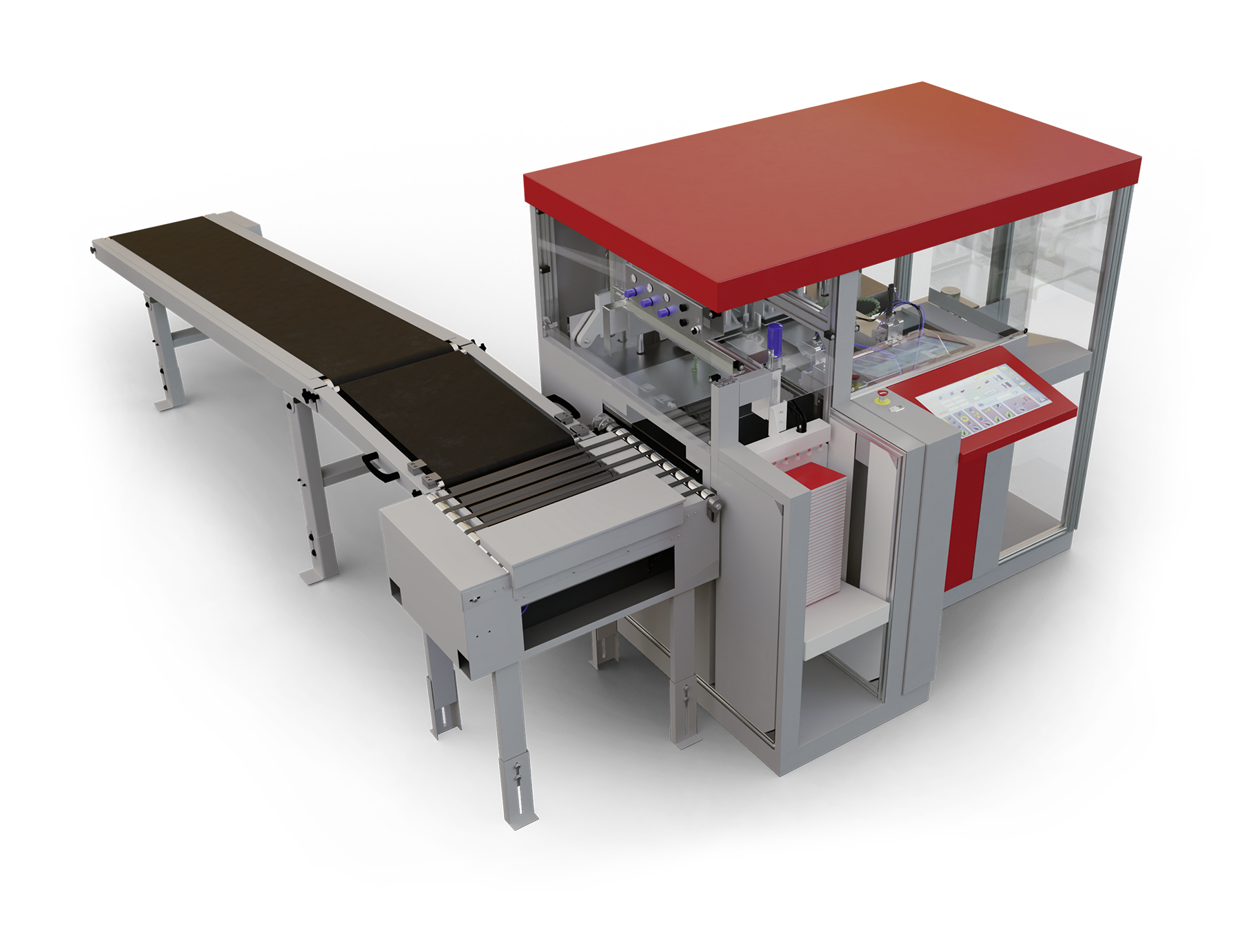
Options include an infeed barcode reader for completeness verification, a scan-and-print barcode printer, an inline pressing device at the machine exit and an offline pressing device for additional pressing of finished blocks. The appropriate options depend on your production requirements.
Tell Digibook which products you want to produce, your sheet and finished-book formats, paper and board materials, typical section counts and required production volume. Include your company location and existing equipment so the discussion can cover availability, configuration and workflow fit.